Step 3: Reaching Operational Depth – Beginning the Filtration Process

Updated: Oct 4
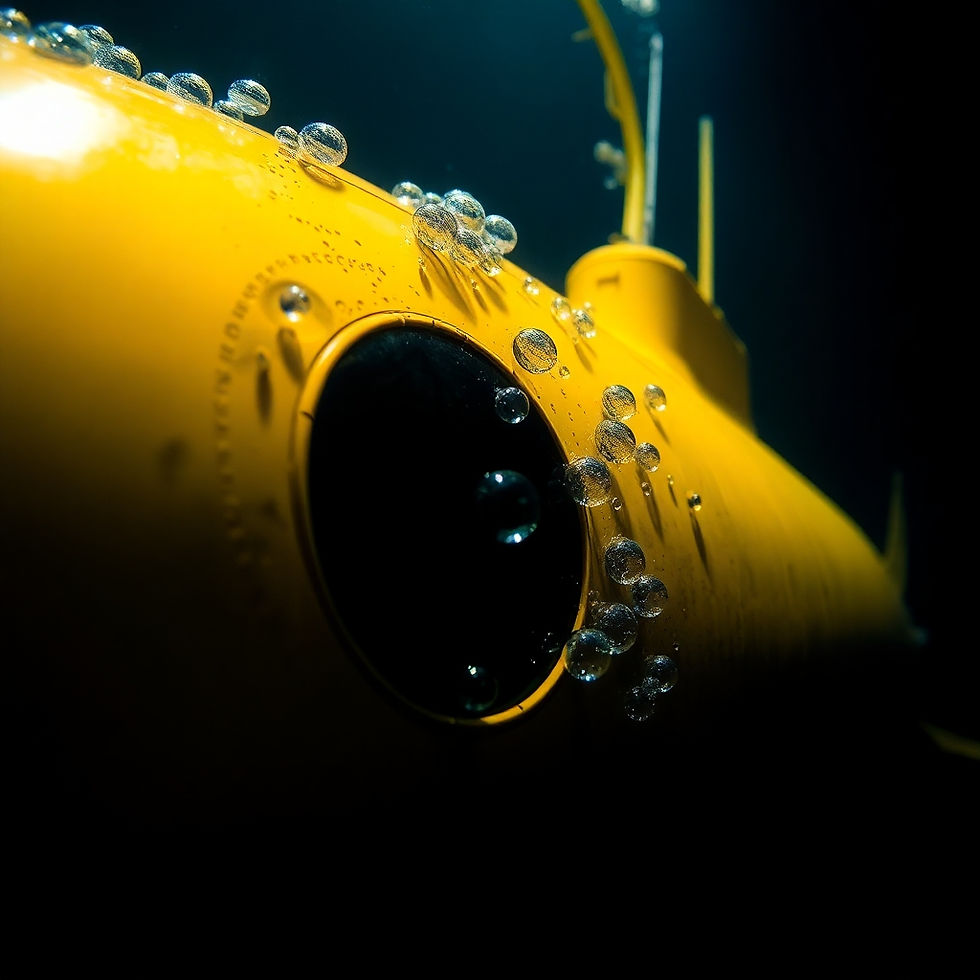
After completing its controlled descent, the NEAT + WATER submarine arrives at its designated operating depth and prepares to begin the next phase of its mission.
Once the target depth has been reached, the onboard control system initiates a carefully timed sequence of valve operations. The submarine first verifies that it is stable and positioned correctly before activating its internal water management system.
The first stage involves opening the valves connected to the compressed air chambers. The stored compressed air is released into the submarine's seawater ballast chambers, forcing the seawater out of these chambers. This process prepares the submarine for the next phases of the mission while maintaining control of its internal systems.
At the same time, a second set of valves opens to direct seawater toward the reverse osmosis (RO) filtration system. As seawater enters the filtration assembly, it passes through specialized RO membranes that separate freshwater from dissolved salts and other impurities.
The filtration process creates two separate streams. The purified freshwater is collected inside a dedicated freshwater storage tank within the submarine, while the remaining concentrated saltwater—commonly referred to as brine—is directed into a separate saltwater holding chamber. By keeping these two streams isolated, the system is designed to preserve the quality of the produced freshwater while safely managing the concentrated saltwater until the next stage of the operation.
The coordination of compressed air, valves, and filtration systems is managed automatically by the submarine's onboard control software. Sensors continuously monitor pressure, water flow, tank levels, and system performance to help ensure that each component operates according to its intended sequence.

This stage represents the heart of the NEAT + WATER concept. At its operating depth, the submarine performs its primary mission: separating freshwater from seawater and storing both the freshwater and the concentrated saltwater in dedicated onboard chambers for the remainder of the mission.
Once the freshwater tank has reached its planned capacity and the filtration cycle is complete, the submarine is ready to begin the next stage of its journey—preparing to return toward the surface and deliver its freshwater payload back to the support vessel.
Each successful filtration cycle brings NEAT + WATER one step closer to its vision of providing an innovative and sustainable approach to freshwater production using autonomous underwater technology.


Comments